%20(2).png)

The Ileal Erosion: How Bacterial Shifts Destroy the Intestinal Barrier
The terminal ileum—the final section of the small intestine before it meets the colon—is a critical junction in maintaining gut health. When the delicate balance of bacteria in this region shifts, the consequences cascade through the intestinal barrier, triggering inflammation and disrupting the protective mechanisms that keep harmful substances from entering the bloodstream. Understanding how these bacterial shifts cause ileal erosion provides crucial insights into maintaining optimal digestive system function.
Understanding the Ileum and Its Bacterial Ecosystem
The ileum harbors a distinctive microbial community that differs substantially from other sections of the gastrointestinal tract. This region contains specialised immune cells and bacteria that work together to maintain intestinal homeostasis. The mucosa-associated microbiota in the terminal ileum plays a fundamental role in regulating immune responses and preserving barrier integrity [1].
The intestinal barrier is a semipermeable structure that regulates nutrient absorption while limiting exposure to harmful antigens, toxins, and microorganisms [2]. When bacterial populations in the ileum shift from beneficial to pathogenic species, this critical barrier begins to deteriorate. This process, known as dysbiosis (a state of microbial imbalance where reduced bacterial diversity makes the gut more susceptible to infections and impairs digestive system function) sets the stage for progressive barrier erosion [3].
The Segmented Filamentous Bacteria Decline
Segmented Filamentous Bacteria (SFB) represent keystone organisms in the ileal microbiome. These specialised bacteria adhere closely to the epithelial cells lining the intestinal wall, where they influence the development and function of the immune system. SFB play an indispensable role in promoting homeostatic T helper 17 (Th17) cells, immune cells that maintain barrier integrity and protect against pathogenic invasion without triggering excessive inflammation.
When SFB populations erode, the carefully calibrated immune environment of the ileum begins to collapse. The loss of these beneficial bacteria creates an ecological vacuum that pathogenic species rapidly exploit, initiating a cascade of detrimental changes throughout the intestinal ecosystem.
The Rise of Enterobacteriaceae
As SFB populations decline, members of the Enterobacteriaceae family, including species like Escherichia coli, proliferate dramatically to fill the ecological void. Research on inflammatory bowel conditions has consistently documented increased relative abundance of Proteobacteria, the phylum containing Enterobacteriaceae, coinciding with reduced Firmicutes in dysbiotic states [4].
Studies examining gut dysbiosis in inflammatory conditions have identified specific pathobionts from the Enterobacteriaceae family as key contributors to barrier dysfunction [5]. These opportunistic bacteria produce inflammatory metabolites and adhere to the intestinal epithelium in ways that compromise tight junction proteins, the cellular structures that maintain barrier integrity.
The shift from SFB to Enterobacteriaceae represents more than a simple numerical change. It fundamentally alters the biochemical and immunological environment of the ileum, setting the stage for immune system dysregulation.
Immune System Dysregulation
The bacterial shifts in the ileum trigger significant changes in the local immune environment that accelerate barrier deterioration: — see also the body-first hypothesis of Parkinson's disease
Decreased Homeostatic Th17 Cells
The loss of SFB directly correlates with reduced populations of homeostatic Th17 cells. These regulatory immune cells normally:
- Maintain epithelial barrier function
- Produce antimicrobial peptides
- Regulate tissue repair mechanisms
- Balance inflammatory responses
Without adequate Th17 cell populations, the intestinal lining becomes vulnerable to pathogenic invasion and loses its capacity for effective self-repair.
Increased CD11b+ Macrophages
Simultaneously, pro-inflammatory CD11b+ macrophages accumulate in the ileal mucosa. Unlike the tissue-resident macrophages that support barrier maintenance, these infiltrating immune cells produce inflammatory mediators that damage the epithelial layer and perpetuate the inflammatory cycle.
Cytokine Storm
The dysregulated immune response produces elevated levels of pro-inflammatory cytokines, particularly:
- Tumour Necrosis Factor (TNF): Disrupts tight junction proteins and promotes epithelial cell death
- Interleukin-6 (IL-6): Drives systemic inflammatory responses and impairs barrier regeneration
These cytokines create a self-perpetuating cycle of inflammation that progressively damages the intestinal architecture [6]. The combined effect of decreased protective immune cells and increased inflammatory mediators directly leads to measurable physical breakdown of the barrier itself.
Intestinal Barrier Breakdown
The combined effects of bacterial shifts and immune dysregulation manifest in measurable barrier disruption through specific structural changes:
Loss of ZO-1 Tight Junction Proteins
Zonula occludens-1 (ZO-1) is a critical scaffolding protein that maintains tight junctions between epithelial cells. These tight junctions form the physical seal that prevents intestinal contents from leaking into surrounding tissues. When inflammatory cytokines like TNF surge, they trigger the degradation and mislocalization of ZO-1 proteins [7].
The loss of tight junction integrity allows:
- Bacterial fragments to cross the epithelial barrier
- Dietary antigens to penetrate tissues inappropriately
- Inflammatory mediators to spread systemically
- Immune cells to migrate abnormally
Elevated Fecal Calprotectin
Fecal calprotectin, a protein released by neutrophils during intestinal inflammation, is a biomarker for barrier disruption and mucosal inflammation. Elevated levels indicate active immune cell infiltration and tissue damage in the intestinal lining [8]. — see also fecal microbiota transplant studies in Parkinson's
The presence of increased fecal calprotectin confirms that the bacterial shifts have progressed beyond simple dysbiosis to active erosion of the intestinal barrier, representing a measurable endpoint of the cascade initiated by SFB loss and Enterobacteriaceae expansion.
The Dysbiosis Cascade: A Progressive Process
Understanding how bacterial imbalances develop and progress helps explain the cascading nature of ileal erosion from initial bacterial shifts to complete barrier breakdown:
| Stage | Bacterial Changes | Immune Impact | Barrier Status |
|---|---|---|---|
| Early Dysbiosis | Modest SFB reduction | Mild Th17 decrease | Intact with minor permeability |
| Moderate Dysbiosis | Significant SFB loss, Enterobacteriaceae expansion | Increased macrophages, rising TNF/IL-6 | Compromised tight junctions |
| Advanced Dysbiosis | SFB nearly absent, Enterobacteriaceae dominance | Severe immune dysregulation | Severe barrier disruption |
This progressive cascade demonstrates why early intervention is critical; each stage builds upon the previous, making restoration increasingly challenging as dysbiosis advances.
Beyond Terminal Ileitis: Broader Implications
While terminal ileitis (inflammation of the ileum) is commonly associated with specific conditions, the bacterial shifts and barrier erosion described occur across various states of gut dysfunction [9]. The mechanisms of ileal erosion represent fundamental pathways through which gut microbiome imbalances compromise health, regardless of specific diagnostic labels.
Research demonstrates that chronic inflammation characterised by patchy involvement is a predominant pattern in ileal dysfunction, regardless of the specific timing or triggering factors [10]. This universality reinforces the importance of addressing the underlying bacterial shifts rather than focusing solely on symptom management.
Understanding these mechanisms provides a foundation for effective intervention, but successful restoration requires precision analysis of individual bacterial populations. — see also mitochondrial fragmentation and brain innate immunity
The GutGutGoose Approach to Bacterial Balance
At GutGutGoose, we recognise that addressing ileal erosion requires precision understanding of individual bacterial populations. Our approach differs fundamentally from generic supplementation strategies by targeting the specific bacterial shifts that drive barrier erosion.
Comprehensive Gut Microbiome Analysis
We analyse 300+ bacterial strains through metagenomic DNA sequencing of at-home stool samples. This gut microbiome test provides unprecedented visibility into the specific bacterial shifts occurring in your intestinal ecosystem, including the critical balance between beneficial organisms like SFB and potentially harmful Enterobacteriaceae.
Traditional gut health test kits often provide limited species identification. Our comprehensive analysis identifies the exact strains present, their relative abundances, and their functional capacities within your unique microbiome, revealing the precise stage of dysbiosis cascade you're experiencing.
Personalised Probiotic Formulation
Generic probiotics cannot address the specific bacterial deficits that drive ileal erosion. We create customised probiotic formulations matched to your individual microbiome profile, targeting the precise bacterial gaps that compromise your intestinal barrier.
Our personalised probiotics Australia-wide delivery system ensures that you receive pharmaceutical-grade formulations compounded in TGA-licensed facilities in Queensland. Each customised probiotic formula contains strains selected through AI-powered modelling to address your specific microbial imbalances, whether that means restoring SFB-like beneficial bacteria, suppressing Enterobacteriaceae overgrowth, or supporting Th17 cell development.
Verification of Colonisation
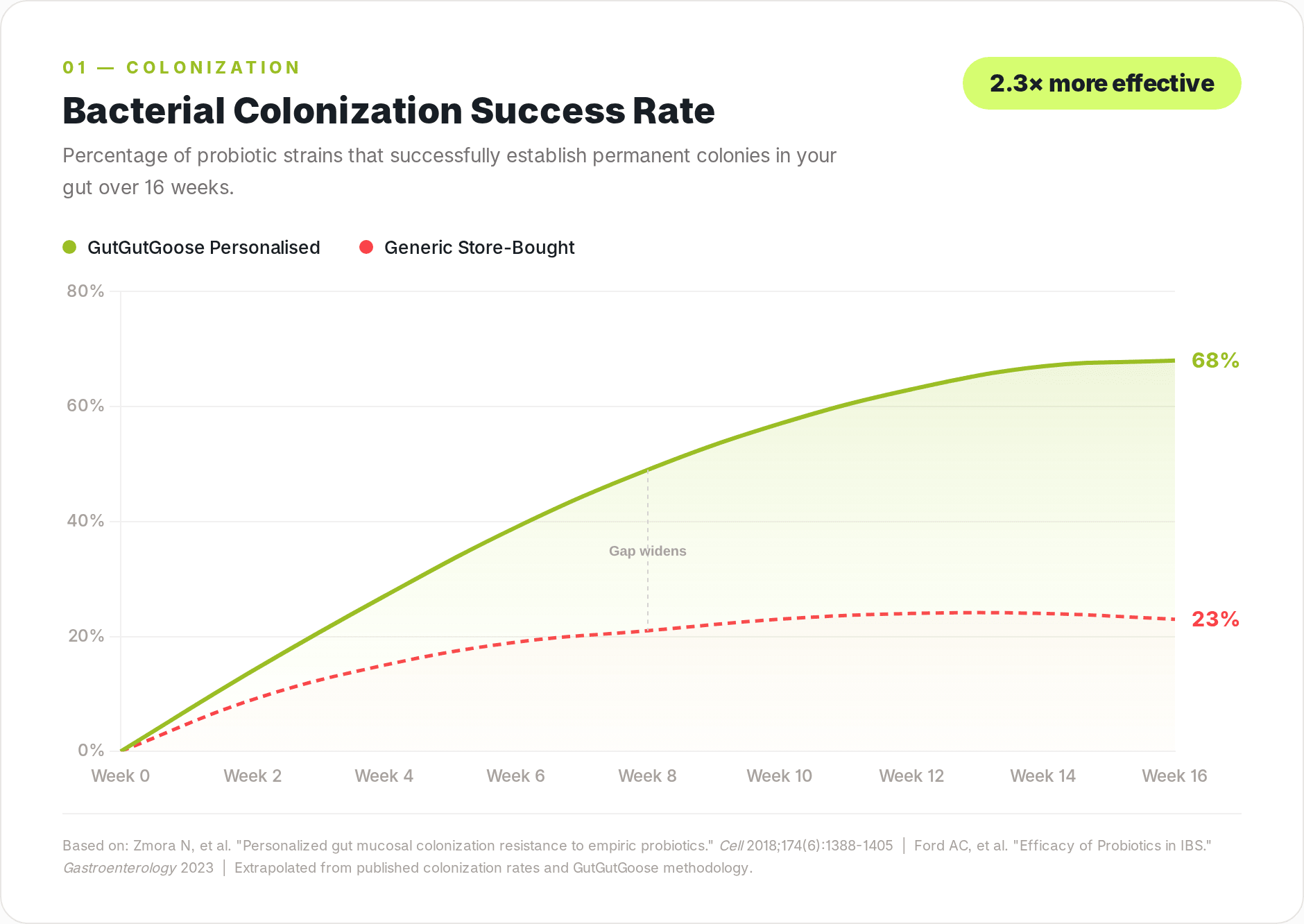
We don't simply deliver probiotics and hope they work. Our quarterly DNA verification proves whether the beneficial strains actually colonise your gut. This colonisation resistance monitoring (tracking whether introduced bacteria successfully establish in your microbiome) provides accountability that standard supplementation lacks.
If the strains don't establish within 180 days, we offer a money-back guarantee. This confidence stems from our data-driven approach: we show you the data demonstrating how your microbiome responds to intervention, tracking the reversal of dysbiosis cascade stages over time.
Maintaining Intestinal Barrier Health: A Holistic Approach
Supporting optimal digestive system function requires a holistic approach that complements targeted probiotic intervention: — see also reducing systemic inflammation at its root cause
- Regular microbiome assessment to track bacterial populations and identify dysbiosis early
- Targeted probiotic supplementation matched to individual needs rather than generic formulations
- Dietary choices that support beneficial bacterial growth, particularly fibre-rich foods that nourish SFB and similar organisms
- Stress management to minimise immune dysregulation that exacerbates cytokine production
- Adequate sleep to support barrier repair mechanisms and immune system regulation
- Regular physical activity to promote microbial diversity and reduce inflammation
These complementary strategies work together to maintain the delicate bacterial balance in the ileum and preserve intestinal barrier integrity, creating an environment where beneficial bacteria can thrive and pathogenic species remain suppressed.
The Future of Gut Health Management
Understanding the mechanisms of ileal erosion, from SFB decline and Enterobacteriaceae expansion to cytokine surges and tight junction breakdown, illuminates why generic approaches to gut health often fail. The bacterial shifts that destroy the intestinal barrier are highly individual, requiring personalised assessment and targeted intervention.
Our vision extends beyond simply providing probiotics. Through longitudinal data from subscription retesting, we're developing predictive models that identify microbiome patterns before they progress to barrier dysfunction. This hybrid mechanistic-AI framework combines established scientific understanding of gut physiology with advanced modelling to anticipate health trajectories, potentially intervening at the early dysbiosis stage before significant barrier damage occurs.
By precisely mapping your unique microbiome and delivering strains proven to colonise your gut, GutGutGoose provides a scientifically rigorous solution to addressing the bacterial shifts that compromise intestinal barrier health.
The intestinal barrier represents your first line of defence against the external environment. When bacterial populations shift unfavourably (when SFB decline, Enterobacteriaceae expand, immune dysregulation takes hold, and tight junctions fail) this critical barrier erodes. But with precise microbiome analysis and targeted intervention, you can support your body's natural protective mechanisms and reverse the dysbiosis cascade before irreversible damage occurs.
Always read the label and follow the directions for use.
Citations
- [1] https://pmc.ncbi.nlm.nih.gov/articles/PMC5051106
- [2] https://jenterocolitis.org/storage/upload/pdfs/1703839963-en.pdf
- [3] https://pmc.ncbi.nlm.nih.gov/articles/PMC10887450
- [4] https://www.frontiersin.org/journals/cellular-and-infection-microbiology/articles/10.3389/fcimb.2025.1608025/full
- [5] https://my.clevelandclinic.org/health/diseases/dysbiosis
- [6] https://www.frontiersin.org/journals/microbiology/articles/10.3389/fmicb.2023.1174832/full
- [7] https://pmc.ncbi.nlm.nih.gov/articles/PMC6104804
- [8] https://www.frontiersin.org/journals/psychiatry/articles/10.3389/fpsyt.2024.1373462/full
- [9] https://pmc.ncbi.nlm.nih.gov/articles/PMC9983034
.jpg)